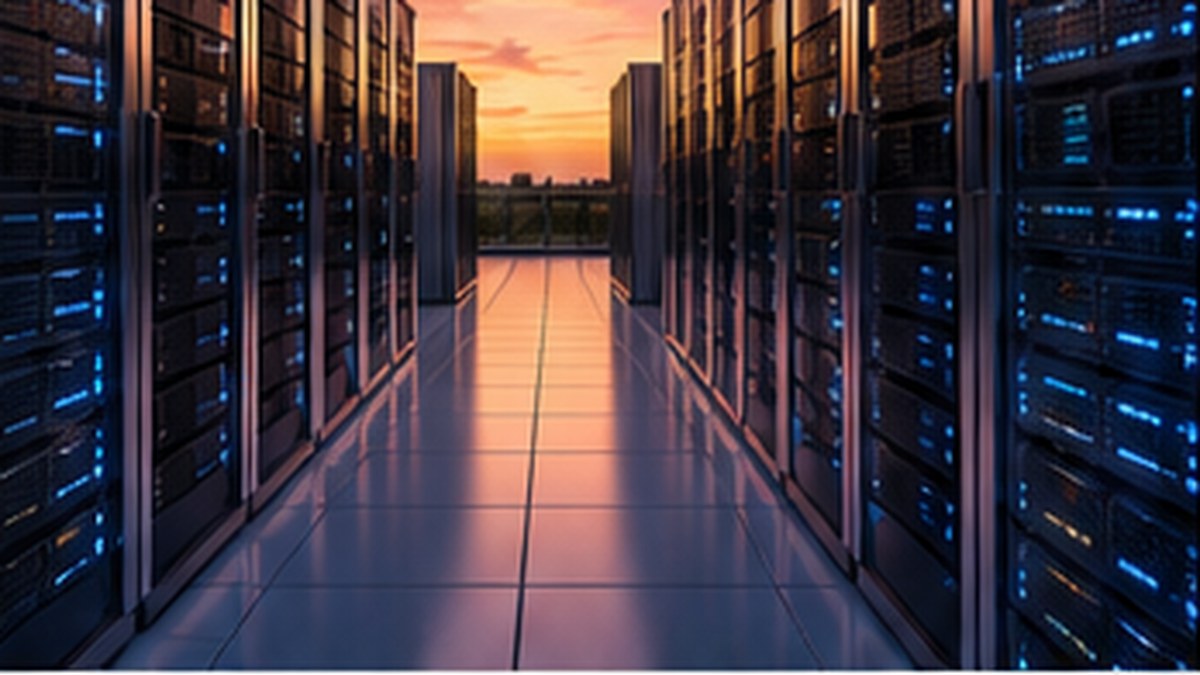
THE DATA CENTERS AREN'T HERE YET. THE QUESTIONS ALREADY ARE.
San Joaquin County has a rare opportunity: decide what large AI and high-intensity data centers should be allowed to consume, build and change before the first major proposal lands on somebody's desk.
Usually government starts asking the hard questions after the concrete trucks arrive. San Joaquin County may get a chance to do it in the opposite order.
Supervisor Robert Rickman has called for a temporary moratorium process covering large artificial-intelligence and other high-intensity data centers in unincorporated areas of the county. According to the Manteca Bulletin, there are currently no large-scale AI data centers operating in those unincorporated areas and no active applications for one.
That matters because this is not a fight over an existing project. It is a debate over the rules before there is a project to fight about.
Why a server building becomes a water story
Modern data centers are easy to describe as giant rooms full of computers. That description hides most of the infrastructure problem. Large facilities can place significant demands on electric supply, cooling systems, water, wastewater capacity, emergency services, road access and backup generation.
Rickman's proposal asks county staff to examine whether existing zoning and infrastructure standards are actually designed for facilities operating at that scale. Potential policies could restrict where large data centers operate, establish specific development standards or temporarily pause approvals while permanent rules are developed.
The Valley is already asking
The question extends beyond San Joaquin County. Over the weekend the Merced Sun-Star highlighted data-center experts advising Central Valley farmers, residents and public officials to dig into water details surrounding future projects. State lawmakers are also debating disclosure requirements for data-center water use.
That puts the 209 in an unusual position. AI infrastructure can mean construction spending, tax revenue and technical investment. It can also mean a new industrial-scale user competing for resources in an agricultural region already accustomed to fighting over water and power.
This does not need to become an anti-tech argument
The useful question is not whether computers are good or bad. It is whether a county understands the cost of hosting the infrastructure before approving it.
If a data-center operator can prove its water source, power requirements, emergency planning, noise controls and infrastructure costs without pushing those costs onto neighbors, put the numbers on the table. If the project cannot survive public accounting, that tells the county something too.
Technology works best when the physical system underneath it is designed on purpose.